Buying Carbon Fiber Fabric – What You Really Need to Know
Anyone who wants to manufacture their own carbon parts quickly faces the question: Which fabric is right for my project? Not all carbon fabrics are the same – weight, weave, and yarn thickness determine how well the material can be processed and how the finished part will look. At Carbon Modifications, you'll find carbon fabrics and carbon fibers designed for processing with epoxy resin – whether you want to laminate mirror caps, interior trim, or custom components yourself.
The 3K carbon fabric with 200 g/m² in plain weave is the classic for beginners: easy to process, clean appearance, and absorbs resin well. Those who want to cover complex shapes are better off using twill weave – the diagonal weave makes the material significantly more formable. From 245 g/m² upwards, the fabric becomes a bit stiffer, which is advantageous for flat components but requires more experience for tight radii.
Canvas or linen – which weave suits when?
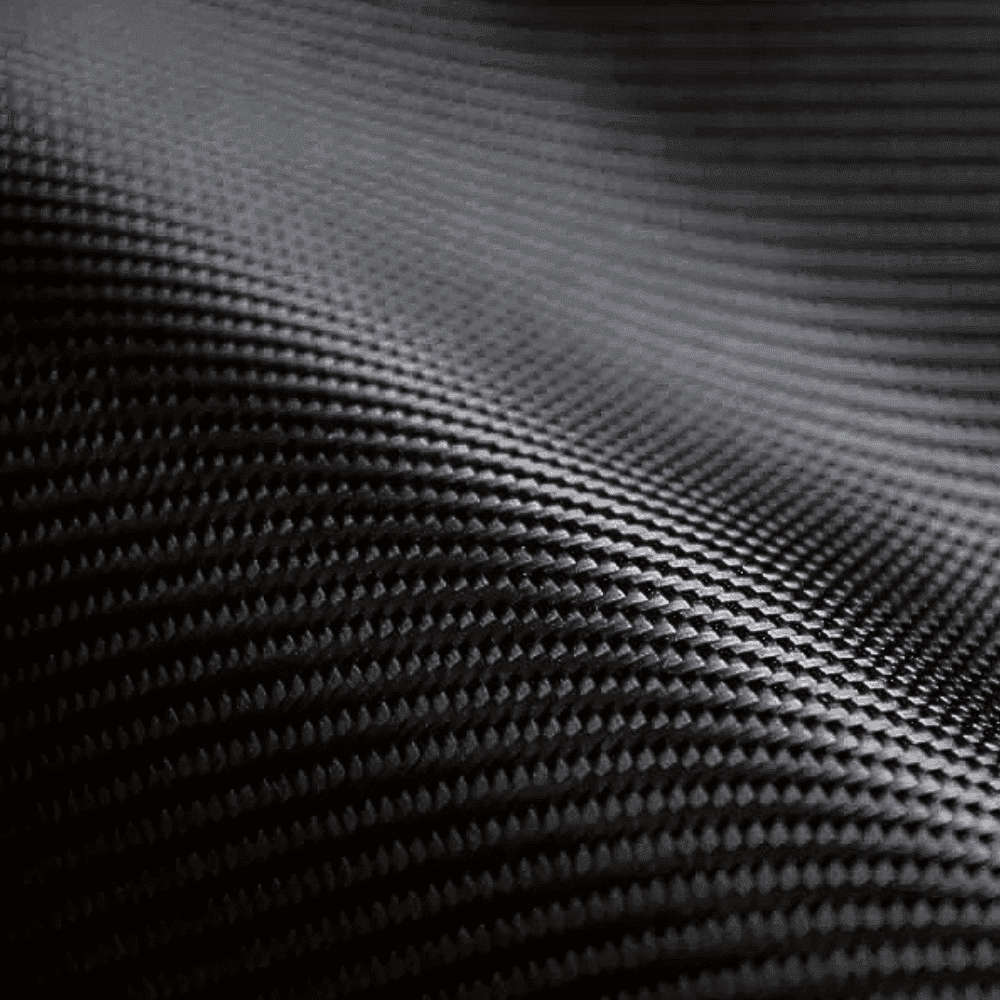
The weave is not purely an optical feature. Plain weave has a strictly right-angled thread progression – the fabric is less likely to fray when cut and retains its shape before being impregnated with resin. The disadvantage: it forms creases more quickly on curved surfaces.
Twill weave is much easier to lay over curves and three-dimensional surfaces. Those who want to laminate mirror caps or front spoilers almost always work with twill. The visual result – the typical carbon diamond pattern – is created here. At Carbon Modifications, both weave types are available.
3K, 6K, Forged – what do these terms mean?
The number before K indicates how many individual filaments are bundled in a carbon yarn. A 3K yarn consists of 3,000 filaments – this results in a finer weave with a smoother surface. 6K yarns are coarser and appear more striking in the finished part. Forged Carbon is a different category: Short carbon fibers are randomly embedded in resin, creating an irregular, marbled look. At Carbon Modifications, both versions are available – from classic 3K twill to forged carbon material.
Processing carbon fiber correctly - what matters
The fabric alone doesn't make a carbon part. The combination with the right resin is crucial. Epoxy resin is the first choice for carbon fabric – it impregnates the fibers evenly and results in a hard, resilient matrix after curing. When laminating, air bubbles in the fabric are the most common mistake. A laminating roller helps to uniformly work in the resin and avoid voids. In the DIY shop of Carbon Modifications, you will find suitable resin systems that are matched to the offered fabrics.
Your material for custom carbon parts – at Carbon Modifications
Whether you're laminating a carbon part for the first time or already have experience with lightweight construction: The range of carbon fabrics and fibers at Carbon Modifications is designed for practical processing. No material that only works in an autoclave – but carbon fabric that can be processed at home with standard tools. Order your carbon fabric directly in the shop now and combine it with the matching resins and accessories from the DIY section of Carbon Modifications.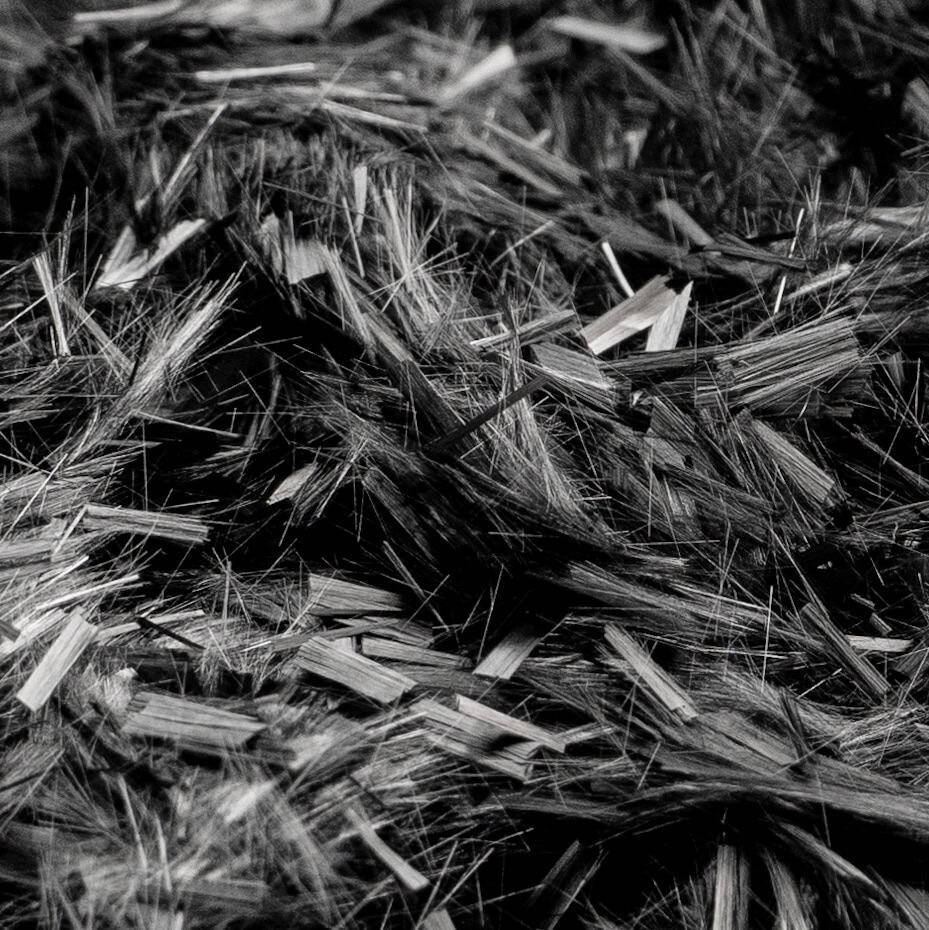

 Skip to content